
Naengmyeon: Why Korea’s Coldest Noodle Dish Is Heating Up Global Tables
[kw_food_map_banner]
It’s the middle of a Seoul summer, humidity sitting on your shoulders like a wet blanket, and the one thing every local is craving isn’t an icy cocktail or a convenience store slushie. They want naengmyeon — a bowl of deeply savory, ice-cold noodles in broth so chilled it’s almost slushy itself, with chewy buckwheat noodles that resist every bite. Naengmyeon refers to a traditional Korean cold noodle dish made from buckwheat or starch noodles served in an iced beef broth or spicy sauce, typically garnished with sliced radish, cucumber, a hard-boiled egg, and a thin strip of beef or pork. This isn’t a summer novelty or a trend born from social media virality. Naengmyeon has documented historical roots reaching back at least to the 19th century — and right now, it’s finding new audiences far outside the Korean peninsula.
The Two Naengmyeons You Need to Know
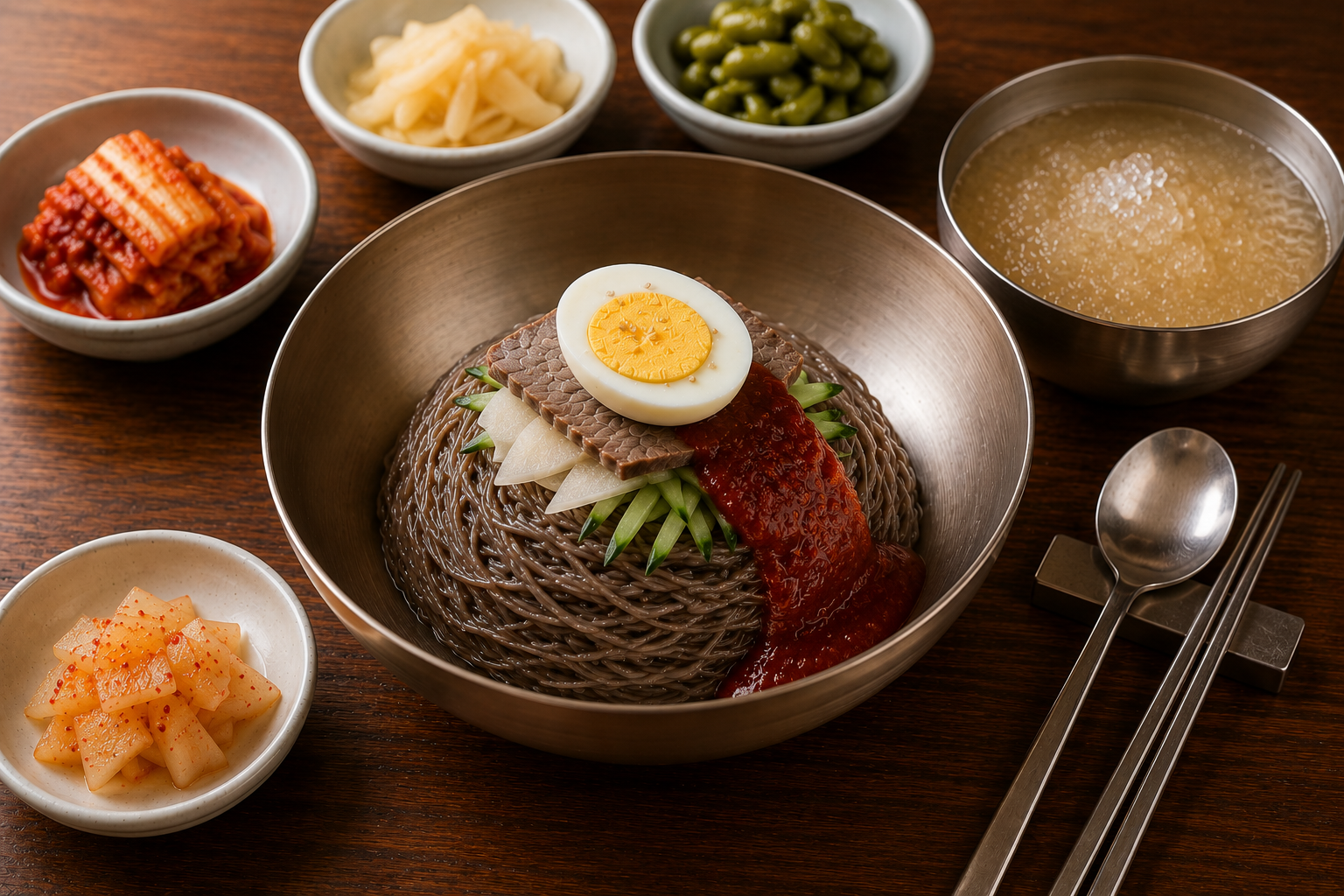
Reducing naengmyeon to one dish is like collapsing ramen into a single category. The two main styles couldn’t be more different in personality. Mul naengmyeon — the Pyongyang style — arrives in a clear, iced dongchimi or beef broth, understated and precise, its flavor so subtle that first-timers often wonder if something’s missing. Something isn’t missing. That’s the whole point. Bibim naengmyeon, the Hamheung variation, is its louder sibling: noodles tossed in a vivid gochujang-based sauce with no broth, intense and unapologetically spicy, demanding immediate attention. Regional identity runs deep here — Pyongyang naengmyeon loyalists and Hamheung devotees have argued for decades about which style deserves the title. The noodle composition differs, too. Pyongyang style traditionally uses buckwheat, lending an earthy, slightly gritty chew. Hamheung noodles are made from potato or arrowroot starch, thinner and more translucent, with a snap that borders on elastic. [LINK: related post about Korean regional food traditions]
Naengmyeon’s Historical Weight and Why It Still Matters
Dismissing naengmyeon as just a summer food flattens centuries of meaning. The earliest reliable written record of cold noodle dishes appears in the 19th-century text Dongguk Sesigi, a seasonal almanac of Korean customs — and the dish carries particular emotional resonance tied to the Korean War. Pyongyang, now the capital of North Korea, was naengmyeon’s original heartland — meaning that for millions of South Koreans whose families fled the north during the war, eating this dish carries a quiet grief alongside the pleasure. Restaurants in Seoul’s Euljiro neighborhood that have been serving the same recipe since the 1950s aren’t merely selling food. They’re maintaining a cultural archive. That weight adds a dimension to naengmyeon that’s genuinely difficult to translate, the same way the American South’s relationship to specific foods carries histories that exceed the plate. Korean food sits at the center of the country’s outbound cultural energy, drawing international visitors specifically seeking dishes like this one — a trend that has grown steadily alongside the broader Korean Wave.
Why International Audiences Are Finally Catching On
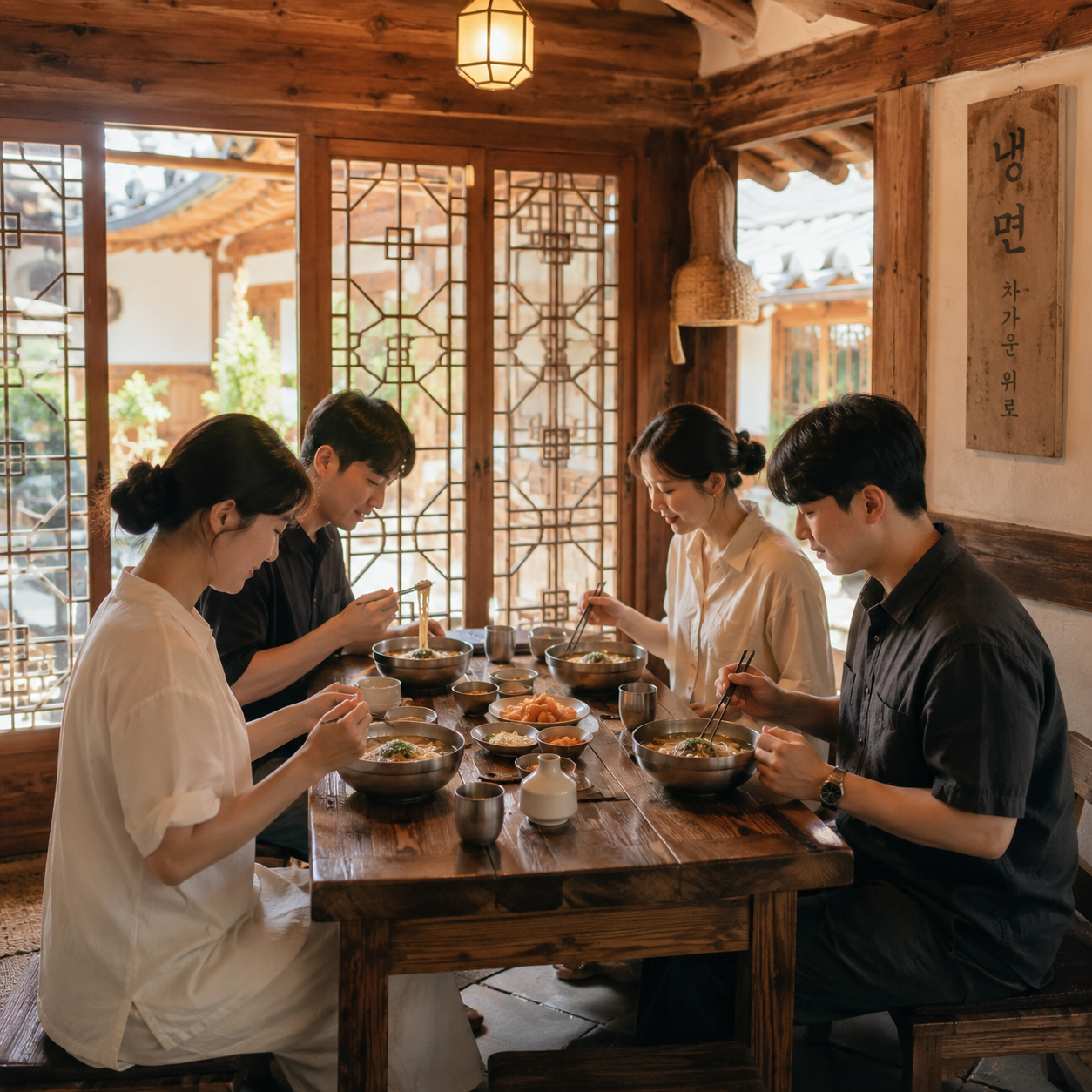
Naengmyeon’s global moment has been building quietly. Korean food’s international profile accelerated significantly after Parasite (2019) and Squid Game (2021) pushed Western audiences to engage more seriously with Korean culture — including its food. According to a 2024 Pew Research Center report, South Korea’s cultural influence is viewed favorably in more than 25 of the 34 nations surveyed, with particularly strong numbers among respondents aged 18-34, ranking above most G7 countries in soft power perception. That favorable view increasingly extends to food. Korean restaurants in London, New York, and Los Angeles have been adding naengmyeon to their menus as diners move past bulgogi and bibimbap familiarity into more specific regional curiosity. The dish also travels well conceptually — cold noodles have existing reference points in Japanese hiyashi chuka and Chinese cold sesame noodles, making naengmyeon legible without being redundant. For deeper coverage of K-culture stories, kloverwave.com tracks the latest Hallyu trends, including how Korean food is reshaping global restaurant culture city by city.
[LINK: related post about Korean food’s global expansion in 2026]
How to Actually Eat Naengmyeon (And What You’re Getting Wrong)
Most first-timers make the same mistakes. They eat too fast, they don’t add the mustard and vinegar sitting on the table, and they’re thrown by the chewy resistance of buckwheat noodles expecting something yielding and soft. Naengmyeon noodles are meant to be long — so long that restaurants traditionally offer scissors to cut them, though food purists argue against this practice. The condiment ritual matters enormously: a splash of rice vinegar brightens the broth, a dab of Korean mustard (gyeoja) adds a sinus-clearing heat that’s completely unlike wasabi or horseradish. You stir, you taste, you adjust. The iced broth warms faster than you’d think, so the window for the ideal temperature is short. In South Korea, naengmyeon is often eaten after a meat course — galbi or samgyeopsal — as a palate-cleansing final act, which reframes how a Western diner accustomed to eating noodles as a main course should approach the portion size and richness level.
💡 Did you know? Naengmyeon holds a specific place in Korean diplomatic history. During the 2018 inter-Korean summit at Panmunjom, North Korean leader Kim Jong-un arranged for Pyongyang’s legendary Okryu-gwan restaurant to send its cold noodle machinery south of the border so summit attendees could eat authentic mul naengmyeon — a gesture loaded with symbolic weight for Koreans on both sides of the DMZ who understand exactly what that bowl represents.
Naengmyeon Deserves a Seat at the Global Food Conversation
Every food culture has a dish that carries more than flavor — a bowl that encodes geography, history, and identity in a way that resists easy explanation. Naengmyeon is that dish for Korea. As Hallyu continues to expand the appetite (literal and cultural) for Korean specificity, expect naengmyeon to follow the trajectory of ramen: a regional staple that becomes a global obsession once the right context surrounds it. Try it in a Seoul basement restaurant with no English menu. Try it in a Koreatown spot that’s been there since before the K-pop wave. Either way, bring your appetite and your patience — this dish rewards both. Share your naengmyeon order in the comments, or tag us when you finally track down the real thing.
🔒 Unlock this map for free by joining Kloverwave — get exclusive access to our curated Google Maps lists, updated weekly.
[restrict]
🗺️ Kloverwave Member Map — Best Naengmyeon Restaurants in Korea
https://www.google.com/maps/search/naengmyeon+Seoul/
[/restrict]
Frequently Asked Questions
Q: What is naengmyeon?
Naengmyeon is a traditional Korean cold noodle dish made from buckwheat or starch-based noodles, served either in an iced beef broth (mul naengmyeon) or tossed in a spicy gochujang sauce (bibim naengmyeon). It is typically garnished with sliced radish, cucumber, a hard-boiled egg, and thinly sliced meat. The dish is documented as far back as the 19th-century Korean text Dongguk Sesigi and is strongly associated with Pyongyang and Hamheung regional cooking traditions.
Q: Why is naengmyeon significant outside of Korea?
Naengmyeon is gaining international attention as part of Korea’s broader cultural influence — the Korean Wave, or Hallyu, which has driven significant growth in Korean exports across media, tourism, and consumer goods. As Western diners move beyond introductory Korean dishes like bibimbap, naengmyeon represents the next wave of Korean culinary curiosity. Its visibility in diplomatic contexts, including the 2018 inter-Korean summit, has also raised its profile globally.
Q: How do I eat naengmyeon for the first time?
Start by adding a small amount of rice vinegar and Korean mustard (gyeoja) to your broth, stir to combine, and taste before adding more. Eat quickly — the iced broth warms fast and the optimal temperature window is short. In Korea, naengmyeon is traditionally eaten after a meat course as a finishing dish, so don’t be surprised if portions feel lighter than a standalone noodle entrée.
Q: What is the cultural significance of naengmyeon in Korea?
For many South Koreans, especially those with family roots in the north, naengmyeon carries an emotional connection tied to the Korean War and the division of the peninsula. Pyongyang was the dish’s original home, making it a quiet symbol of displaced identity and longing — a dimension that extends well beyond food. The dish’s appearance at the 2018 inter-Korean summit underscored how deeply it functions as a cultural and political symbol, not merely a culinary one.
[META: What is naengmyeon? Discover Korea’s iconic cold noodle dish — its history, two major styles, cultural significance, and why it’s going global in 2026.]