
K-Content in 2026: Why Korean Culture Is No Longer a Trend — It’s the Default
POV: you’re a teenager in São Paulo sobbing over a Korean drama you found through a 3-second TikTok clip. Or you’re a food editor in Berlin who waited four hours in line for tteokbokki at a pop-up that sold out before noon. Or you’re a fashion writer in New York crediting a Korean actor’s airport fit as the defining look of the season.
None of that is coincidence anymore.
K-content covers the full spectrum — music, film, drama, digital content, food media, beauty, fashion — made in South Korea and distributed globally through streaming and social platforms. What started as a regional wave has genuinely restructured how people discover, consume, and emotionally invest in pop culture. Here’s where it stands in mid-2026, and why the momentum is accelerating, not leveling off.
okay so the money part is actually wild
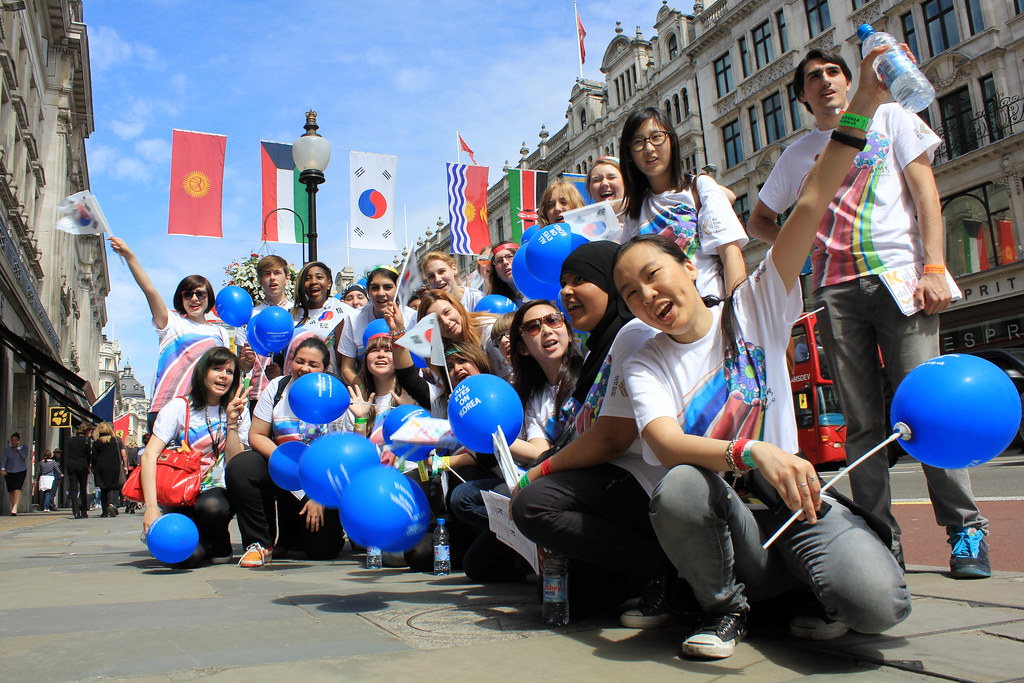
The casual read is that K-content’s global moment is mostly vibes. The financial reality underneath? Different story entirely.
The Korean Wave generated an estimated $25.7 billion in indirect export effects in 2022 alone — factoring in tourism, consumer goods, and media licensing (KOCCA Hallyu White Paper, 2022). And that number doesn’t even touch what’s happened since: the post-pandemic streaming surge, HYBE and SM Entertainment expanding into North American markets, Korean food and beauty imports exploding across Europe.
The business model has shifted too. Early Hallyu ran on physical album sales and broadcast licensing. Now K-content companies are building full IP ecosystems — webtoon-to-drama adaptations, idol universe lore spinning off into mobile games, skincare brands propped up by celebrity-adjacent content strategies. Netflix invested heavily in Korean originals and reportedly saw Korean content become one of its highest-performing regional categories by viewership hours globally.
The industry isn’t chasing Western validation. It’s setting the tempo. 🎯
[LINK: related post about the business model behind Korean entertainment companies]
south korea is outranking G7 countries in cultural influence and i need a moment
Soft power used to mean military alliances and trade deals. Gen Z measures it differently — in whose music you stream at midnight, whose K-beauty products you actually trust, whose dramas you’re finishing on a Tuesday at 2 a.m. when you have work tomorrow.
According to a 2024 Pew Research Center report, South Korea’s cultural influence is viewed favorably in over 25 of 34 surveyed nations — ranking higher than most G7 countries in soft power perception among 18–34-year-olds. That’s not a fluke. It’s the result of decades of deliberate government investment in cultural export infrastructure, combined with an entertainment industry that understood parasocial engagement before Western platforms had a name for it.
The contrast with how other countries approach this is striking. France exports cinema through institutions. The U.S. uses Hollywood’s sheer scale. Korea built a feedback loop — fan communities become unpaid global ambassadors, algorithmic virality amplifies niche content to mass audiences, and perceived authenticity drives loyalty more effectively than any ad budget could. They didn’t just make great content. They engineered emotional infrastructure.
plot twist: K-dramas are now being reviewed like HBO shows

The drama space in 2026 is doing something genuinely new — competing with American prestige TV for critical attention. Studios like Studio Dragon and JTBC are getting reviewed by The Atlantic and Vulture with the same framework previously reserved for HBO. The range has widened: psychological thrillers, workplace satires, slow-burn romances, high-concept sci-fi — all in a single season’s release calendar.
K-pop has hit a structural maturation phase. Fourth-gen groups are navigating real tension between the idol system’s traditional constraints — years of trainee life, strict image management, limited creative autonomy — and a fanbase demanding authenticity and personal expression. Several artists are now producing their own music and publicly talking about mental health, blurring the line between idol and artist in ways that would’ve been unthinkable ten years ago.
Korean cinema keeps riding Parasite’s long coattail. International co-productions are more common now, and Korean directors are landing Hollywood development deals at a rate that would’ve seemed implausible in 2015. Ngl, the industry moved fast. 🎬
For deeper coverage, kloverwave.com tracks Hallyu trends across music, drama, food, and beyond — updated weekly for fans who want analysis, not just headlines.
[LINK: related post about fourth-generation K-pop groups and the future of the idol system]
why does this content hit so differently tho
Western media critics keep circling this question without fully landing it: why does Korean content connect so deeply across such wildly different cultural contexts?
Emotional specificity. That’s the answer.
Korean dramas are built on social dynamics — age hierarchy, nunchi (the ability to read a room’s unspoken emotional atmosphere), the weight of family obligation, the shame-and-pride axis of collective identity. These feel foreign enough to be interesting but human enough to be immediately legible. A Brazilian viewer watching a Korean mother’s silence communicate disappointment without a single line of dialogue doesn’t need context. She already knows that silence.
Korean beauty content pulled the same move. The Korean skincare routine wasn’t just a product trend — it was a philosophy telling a global audience to slow down, treat self-care as precision rather than indulgence. That framing hit differently than any Western beauty ad. K-food media followed: showing the labor, the technique, the communal meaning behind a dish, not just the aesthetic. It’s storytelling across every format.
💡 Quick cultural note: Nunchi — often translated as “eye measure” — is a core Korean social skill. It’s the ability to read unspoken emotions and expectations in a room and adjust accordingly. Characters who lack it in Korean dramas are written as comic or tragic figures, and audiences across cultures immediately recognize the social cost. No clean English equivalent exists, which is exactly why it travels so well.
this isn’t peaking. it’s compounding.
K-content in 2026 has diversified financial infrastructure, measurable soft power, and creative output that holds up to international comparison — not as a compliment, but as an accurate description. The more interesting question isn’t whether Korean culture stays relevant globally. It’s how deeply it will reshape the creative industries it’s already entered.
If you’re watching, reading, or eating your way through this moment — you’re not following a trend. You’re watching a new cultural center of gravity do its work.
Share this with the person who got you into K-content. Or the one who still hasn’t started yet. Who’s your entry point been — drama, music, food? Drop it below. 👇
FAQ
What is K-content?
The full range of South Korean creative media exported globally — K-pop, K-dramas, Korean film, webtoons, beauty content, and food media — distributed internationally through streaming platforms and social media.
Why is it so popular worldwide?
A 2024 Pew Research Center report found South Korea ranks higher than most G7 countries in cultural soft power perception among 18–34-year-olds across 34 nations. High production quality, emotionally resonant storytelling, and organized global fan communities created a self-reinforcing cycle of international reach.
Is there a good Seoul travel guide for first-time visitors?
Yes — several travel outlets now publish dedicated Korea trip itineraries that blend cultural landmarks, food districts, and K-content filming locations into a single trip, reflecting how deeply Hallyu has shaped what international visitors actually want to see and do when they arrive.
How do I start if I’m new?
K-dramas on Netflix are the most accessible entry point — Crash Landing on You or Squid Game both have large international fan communities and subtitles in most languages. For music, YouTube and S
🛒 Recommended: Korean Skincare Starter Kit
🛒 Shop: Official K-pop Albums on Amazon
📚 Learn Korean: Korean Language Workbooks on Amazon
✉️ Never miss a comeback — Weekly K-content digest delivered to your inbox. Join here →
Related Posts
- BOOMPALA: The Korean Kids’ Song Going Viral Worldwide
- Korean Fashion: How Seoul Became the World’s Style Capital
- K-Content in 2026: Why Korean Culture Still Owns the Global Conversation