
K-Content in 2026: Why Korean Culture Still Owns the Global Conversation
POV: you open Netflix on a random Tuesday night and something Korean is sitting right at the top. Not tucked into some “world cinema” subcategory. Front and center. Competing with American prestige drama and British crime series for the exact same audience.
That’s not a coincidence. And it’s definitely not slowing down.
K-content covers the full range of Korean cultural exports — dramas, films, music, variety shows, webtoons, podcasts, and the lifestyle media that travels with all of it. According to KOCCA’s Hallyu White Paper, the Korean Wave generated approximately $25.7 billion in indirect export effects in 2022 alone, accounting for tourism, consumer goods, and media combined. This piece breaks down what’s fueling that number, where things stand in 2026, and why Western audiences keep coming back. 🌊
okay so streaming changed everything — here’s how

Before Netflix got serious about Korean originals around 2019–2020, most Western engagement with K-content ran through dedicated fan communities. Subtitling networks. Import platforms like Viki. YouTube clips that somehow always hit the algorithm right. That infrastructure wasn’t small — it built a genuinely literate, passionate audience who understood cultural subtext before most American critics had even heard of Reply 1988.
Now the pipeline is industrial.
Netflix, Disney+, Apple TV+, and Amazon have all commissioned or acquired Korean content at scale. A drama that drops on a Friday in Seoul lands simultaneously in São Paulo, Lagos, and Stockholm — same episode, same moment. That shared timeline created something new: a global fandom that isn’t geographically isolated. The conversation is multilingual and happening in real time.
And it raised the creative ambition, too. Korean creators are now making shows that engage with international genre conventions — the heist thriller, the psychological procedural, the epic fantasy — while keeping distinctly Korean structural choices intact. Sixteen-episode arcs. Clear act breaks. Romantic tension that builds across weeks instead of resolving itself by episode two.
[LINK: related post about best K-dramas to watch on Netflix in 2026]
soft power isn’t just a buzzword — Korea is genuinely winning it
According to a 2024 Pew Research Center report, South Korea’s cultural influence is viewed favorably in more than 25 of 34 surveyed nations. Among respondents aged 18 to 34, it ranks higher than most G7 countries in soft power perception. That age bracket is the target demographic for every major streaming platform, every luxury brand, and every global music label.
Korea isn’t just culturally admired. It’s admired by exactly the people with disposable income and platform influence.
Plot twist nobody talks about enough: when a K-drama goes viral, the conversation doesn’t stay about the show. It immediately branches into the filming locations, the food characters are eating, the skincare glimpsed in behind-the-scenes content, the fashion worn on press tours. Interest in K-beauty products spikes. People start researching a Korea trip itinerary after seeing the streets of Seoul on screen. Korean beauty, food, travel, and fashion all surge in international search volume in the weeks after a major content drop. The cultural export and the commercial export are running on the same engine. For deeper coverage on all of it, kloverwave.com tracks the latest Hallyu trends with weekly analysis for a global audience.
what 2026 actually looks like on the ground
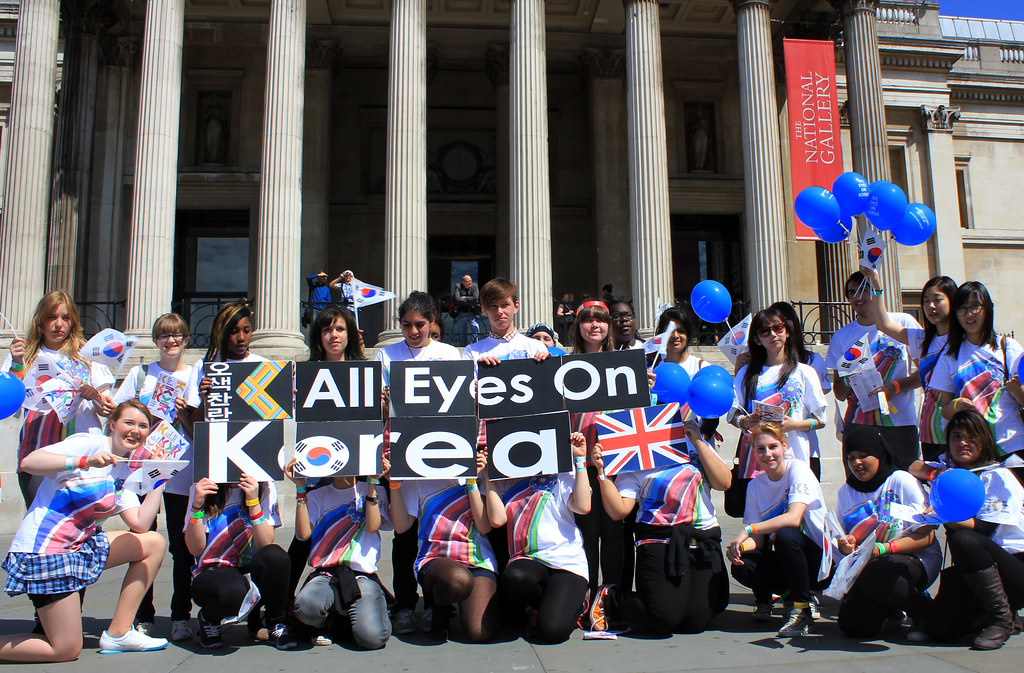
The dominant story heading into the second half of 2026 is consolidation and confidence. The experimental phase — every format tested, every genre explored, every Western collab attempted at least once — is giving way to something more assured. Korean studios know what they’re good at. They’re doubling down. 🎬
Serialized drama still leads, but the webtoon adaptation pipeline has become its own industrial category. Naver Webtoon and Kakao Webtoon both carry enormous IP backlogs that Korean studios are actively converting into streaming content. The visual grammar of webtoon storytelling — compressed emotional beats, stylized flashback structures, heightened character design — is increasingly visible in how these shows are shot and edited. That’s a genuinely new aesthetic contribution to global television.
K-pop continues to run in parallel with K-drama rather than competing with it, but the crossover points are multiplying. Idol-led casting has always existed. But in 2026, more groups are producing original soundtracks that function as actual scored compositions — not promotional inserts. The music is being treated as craft. That shift in intention shows in the output.
[LINK: related post about K-pop industry analysis and 2026 touring trends]
why Gen Z’s relationship with K-content hits different
Older millennials came to K-content through a discovery arc. Found one drama, fell into a rabbit hole, expanded slowly outward. Gen Z didn’t have that arc.
They grew up with the algorithm already curating Korean content alongside everything else. BTS was in their YouTube recommendations the same year Taylor Swift was. Squid Game premiered when they were already fluent in K-drama conventions from years of watching on their phones. The cultural distance is just… smaller. Patience for subtitles is higher because they grew up consuming content with them.
Okay but — what they’re looking for now isn’t novelty. It’s quality, specificity, and cultural honesty. They can spot a production pandering to international stereotypes of Korea just as fast as they can spot one that’s genuinely rooted in Korean social experience. The weight of nunchi — the Korean social intelligence of reading a room without being told anything explicitly. The intergenerational tension between Confucian family hierarchy and individual ambition. The specific exhaustion of a hypercompetitive education system.
The shows that land hardest are the ones that don’t explain these dynamics. They just live in them.
It’s also worth noting that this same Gen Z audience is the one deep-diving into the Korean skincare routine their favorite drama characters swear by, researching Seoul travel guides after falling in love with a filming location, and actually making the trip. The content is a gateway — and a genuinely effective one.
💡 Did you know? The concept of nunchi operates as an invisible social contract in most K-dramas — characters who lack it are coded as emotionally immature or socially dangerous. Western viewers often feel its weight intuitively, even without knowing the term. It’s a recurring dramatic engine in romantic and workplace narratives, and honestly one of the reasons these shows feel so emotionally precise.
what’s coming next — and I’m not ready
K-content in 2026 isn’t something anyone is still debating. The audience is global. The infrastructure is industrial. The creative output is more varied and ambitious than it’s ever been.
The more interesting question is what happens when the next generation of Korean creators — the ones who grew up watching this wave themselves — starts making their own work. The answer, almost certainly, is that it gets weirder, more personal, and more interesting. And I genuinely cannot wait. 🔥
Share this with someone who still thinks K-dramas are a niche thing. They’re not. They’re just the next chapter of prestige television.
FAQs
What is K-content?
K-content refers to the full range of Korean cultural media exports — dramas, films, music, variety shows, webtoons, and the lifestyle content (beauty, food, fashion) that travels globally alongside them. It’s one of the most commercially significant cultural export sectors of the 21st century, driven by streaming distribution and a globally coordinated fan base.
Why is K-content so popular worldwide?
High production quality combined with emotionally specific storytelling that cuts across cultural contexts. A 2024 Pew Research Center report found South Korea’s cultural influence is viewed favorably in more than 25 of 34 surveyed nations, with particularly strong favorability among adults aged 18 to 34 — outperforming most G7 countries in that demographic.
How do I start watching K-dramas if I’ve never seen one?
Netflix, Disney+, and Vi
🛒 Recommended: Korean Skincare Starter Kit
📬 Get K-content updates first — Join 5,000+ Hallyu fans. Subscribe free →
Related Posts
- K-Content in 2026: Why the Korean Wave Is Bigger, Smarter, and More Inescapable Than Ever
- Korean Variety Shows: Why Gen Z Can’t Stop Watching
- Korean Culture T3: Why the Third Hallyu Wave Hits Different