
Hearts2Hearts ‘Lemon Tang’ MV: The Summer Comeback That Hits Differently in 2026
Introduction
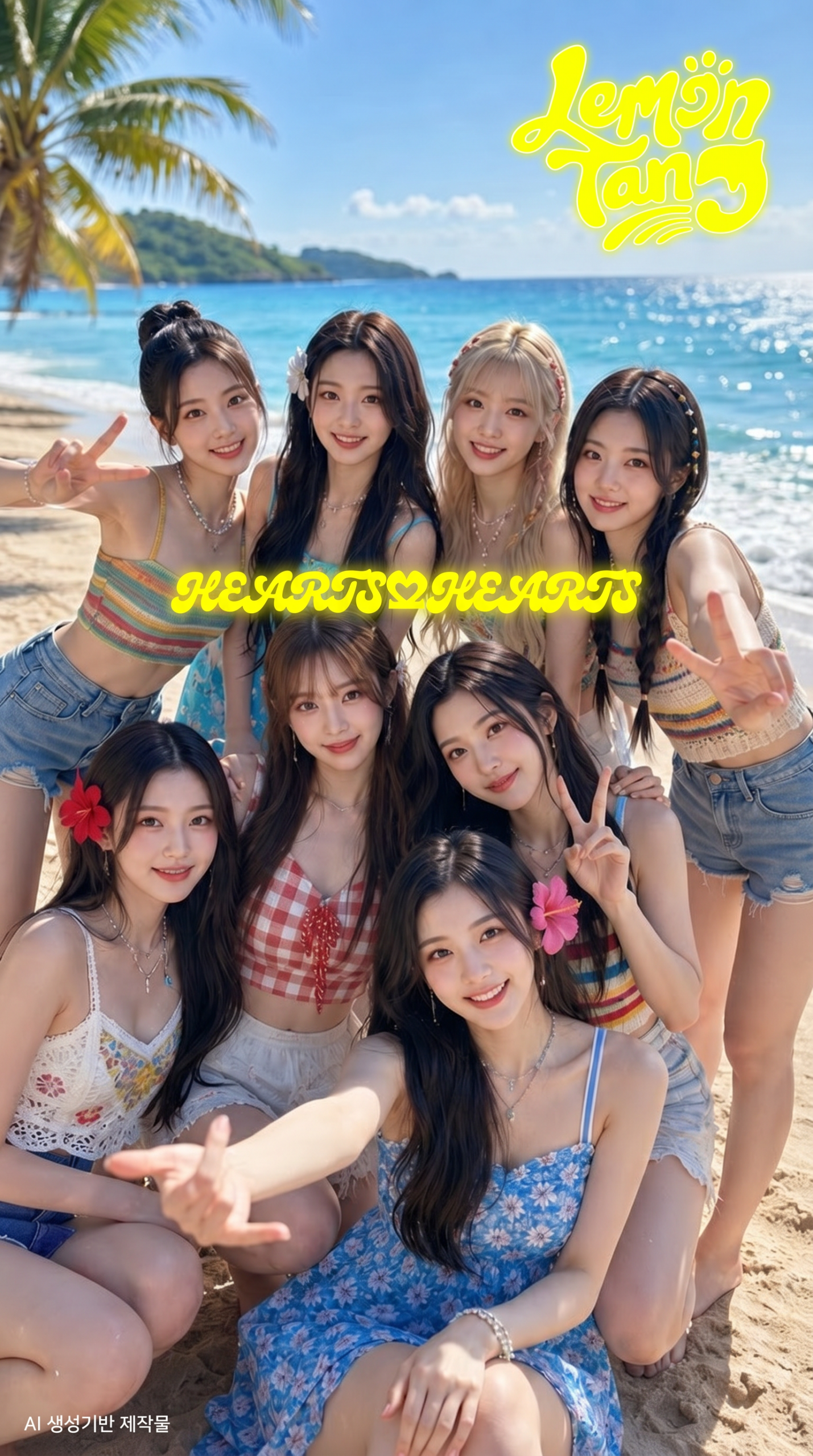
Imagine stumbling on a music video that smells like citrus and feels like the first genuinely hot day of the year. That’s roughly the experience Hearts2Hearts (하츠투하츠) engineered with “Lemon Tang,” the title track of their second mini album, which dropped in June 2026 and immediately sparked conversation well beyond the usual K-pop fan channels. Hearts2Hearts is an eight-member South Korean girl group under SM Entertainment, which debuted in early 2025 and has built a reputation for pairing crisp dance-pop with a fashion-forward girl-crush aesthetic that resists easy genre labeling. This piece breaks down what makes “Lemon Tang” more than a pretty comeback, why the group’s visual and sonic strategy signals a specific moment in Hallyu’s commercial evolution, and whether the hype is actually earned.
[LINK: related post about K-pop comeback MVs that broke through in 2026]
What ‘Lemon Tang’ Gets Right That Most Comebacks Don’t
Most K-pop comeback MVs play it safe. They’re designed to reinforce an established concept and keep the existing fanbase comfortable. “Lemon Tang” does the opposite — it commits to a specific sensory identity from the first frame, saturating the visual palette in acidic yellows and bruised purples, cutting between extreme close-ups of skin textures and wide architectural shots that feel more like a perfume ad directed by a Gen Z fashion photographer than anything in the standard idol playbook.
The production choice here is deliberate. The direction leans on a commercial, editorial sensibility rather than the standard idol-MV template, and that influence shows. Every transition is motivated. Every color choice carries emotional weight rather than serving pure aesthetic gloss.
Sonically, “Lemon Tang” pulls from the same hyperpop-adjacent space that PC Music popularized in the West and that groups like aespa have since absorbed into the mainstream K-pop vocabulary. But where aespa layered hyperpop onto a mythology-heavy concept, Hearts2Hearts strips the lore entirely and just lets the sound hit. The result feels both familiar and genuinely new — which is the hardest trick in the business.
According to the Korea Creative Content Agency (KOCCA), the Korean Wave generated an estimated $25 billion in indirect export effects in 2022, accounting for tourism, consumer goods, and media combined — and release MVs are increasingly functioning as a key touchpoint in that economic chain. (Source: KOCCA Hallyu White Paper 2022)
The Visual Language: More Fashion Week Than Music Show
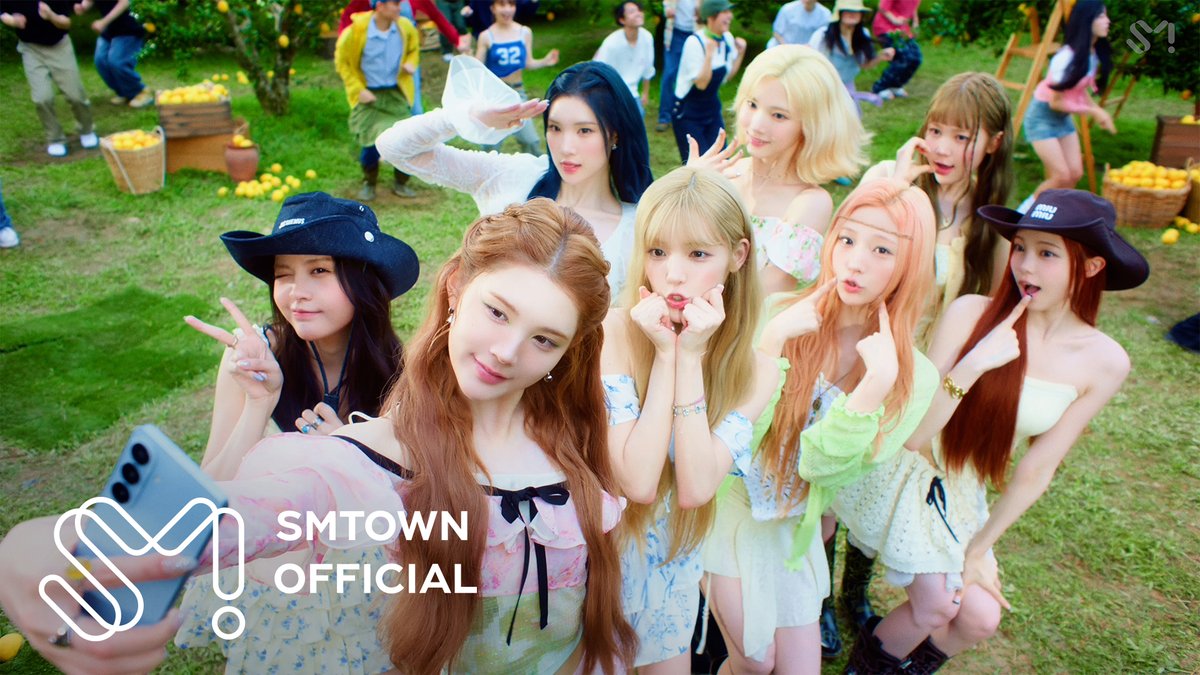
K-pop has always borrowed from fashion, but “Lemon Tang” collapses the distance between the two almost completely. The styling — oversized suiting in chalky lemon, latex accessories, chunky platform boots that reference both Y2K and current Seoul street fashion — reads less like a stylist’s mood board and more like a coherent collection. These are looks you’d clock at Seoul Fashion Week, not just on a music show stage.
This matters commercially. When a K-pop MV functions as a de facto fashion editorial, it generates a second wave of content: styling breakdowns, outfit ID threads, brand tagging on social platforms. Hearts2Hearts’s management clearly understands that the MV is not just a promotional vehicle for the song — it’s content infrastructure that multiplies across platforms.
For deeper coverage of K-culture stories, kloverwave.com tracks the latest Hallyu trends, particularly in the intersection of K-pop and K-fashion, where crossover audiences are growing fastest.
There’s also a subtle but real critique embedded in the video’s aesthetics. The group isn’t performing for a live audience in the MV — there are no concert crowd cutaways, no fan interactions. The entire visual grammar treats the viewer as a peer, not a spectator. That’s a specific choice, and it signals a generation of idols who came up watching creator culture as much as idol culture.
Research from a 2024 Pew Research Center report found that South Korea’s cultural influence registers favorably in over 25 of 34 surveyed nations, ranking above most G7 countries in soft power perception among adults aged 18 to 34 — and visual-forward content like “Lemon Tang” is part of how that perception gets built and sustained. (Source: Pew Research Center 2024)
Sound Architecture: Why the Production Deserves Its Own Analysis
The song itself is just over three minutes of controlled chaos. The opening eight bars are deceptively minimal — a single synth tone, chopped vocal samples, kick drum that sounds processed through a car stereo in the best possible way. Then the chorus hits, and the arrangement doubles in density without losing clarity. That’s genuinely hard to pull off, and whoever mixed “Lemon Tang” understood dynamic contrast in a way that a lot of K-pop production currently doesn’t.
The members’ vocal assignments are worth noting not as fan trivia but as structural architecture. Lower register verses give way to a bridge built almost entirely on falsetto harmonics — a technique that mirrors the visual shift in the MV from controlled city shots to more abstract, almost dreamlike sequences.
Compared to Western hyperpop touchstones — think Charli XCX’s “Crash” era production or 100 gecs at their most pop-accessible — “Lemon Tang” actually sits closer to accessible than experimental. That’s a smart calibration for a summer single. You lead with something the algorithm can carry, then you get weird later.
[LINK: related post about hyperpop’s influence on fourth-generation K-pop production]
Why This Comeback Matters for K-Pop’s Next Chapter
The K-pop industry is in a transitional moment. Fourth-generation groups established that survival required global thinking from day one. Fifth-generation acts — and Hearts2Hearts arguably belongs to this wave — are inheriting that infrastructure and now have to find something to say with it.
“Lemon Tang” says something specific: that the idol format can coexist with genuine aesthetic vision, that concept-first doesn’t have to mean personality-last. The group’s members carry distinct on-screen presence without the MV ever resorting to the kind of formulaic individual-spotlight cutaways K-pop videos often lean on. Confidence is baked in from the first frame rather than performed for the camera.
Whether Hearts2Hearts can sustain this creative consistency across a full era remains to be seen — but on their second mini album, the vision already looks more deliberate than most groups manage this early.
💡 Did you know? In Korean idol culture, the concept of nunchi — the subtle social intelligence to read a room and respond accordingly — shapes group dynamics far beyond the camera. Idol trainees spend years learning not just performance skills but how to present as a coherent unit in public, which is why debut MVs often feel almost unnervingly coordinated. Groups that successfully translate that coordination into genuine visual identity, rather than just synchronized movement, tend to have longer careers.
Conclusion
“Lemon Tang” is the kind of comeback that makes you adjust your expectations upward — fast. Hearts2Hearts arrived with a fully formed aesthetic, a song that earns repeated listens, and a visual strategy that understands how modern audiences actually consume content. If the group can maintain this standard through the inevitable second-single pressure test, they’re going to be a genuinely interesting act to follow over the next few years. Drop your reaction to “Lemon Tang” in the comments, and share this if you think more people need to know this group exists.
Frequently Asked Questions
Q: What is Hearts2Hearts (하츠투하츠)?
Hearts2Hearts, stylized as 하츠투하츠 in Korean, is an eight-member South Korean girl group that debuted in early 2025 under SM Entertainment, known for combining polished dance-pop production with a fashion-forward visual identity. Their second mini album’s title track “Lemon Tang” (released June 2026) attracted attention for its distinct aesthetic approach and commercially sharp MV direction.
Q: Why is the ‘Lemon Tang’ MV getting so much attention internationally?
The MV stands out because it treats visual storytelling as central rather than supplementary, with a styling and direction approach that references global fashion and creator culture simultaneously. South Korea’s cultural soft power has been rising steadily — a 2024 Pew Research Center survey found Korea ranks favorably in soft power perception among 18-to-34-year-olds across more than 25 of 34 surveyed nations — and release MVs like this one are part of how that perception gets built.
Q: How do I find and watch the Hearts2Hearts ‘Lemon Tang’ MV?
The MV is available on official K-pop video platforms including YouTube, where SM Entertainment hosts the group’s official content via the SMTOWN channel. Searching “Hearts2Hearts Lemon Tang MV” directly in YouTube or on Korean music platform Melon should surface official links without requiring any regional workarounds.
Q: What makes K-pop debut MVs culturally different from Western artist debuts?
K-pop debuts function as full brand launches rather than single-song promotions — they establish a visual concept, introduce member personas, and set aesthetic expectations that the group is then expected to maintain across all subsequent content. This system comes from the trainee culture, where idol candidates spend years preparing a complete, market-ready identity before their first public release.
[META: Hearts2Hearts ‘Lemon Tang’ MV review — why this 2026 K-pop comeback stands out for its visual strategy, summer dance-pop production, and global cultural relevance.]
Related Posts
- Beyond the Mainstream: How VVS K-Pop Certification is Reshaping Success for Gen Z’s Underground Gems
- Okay, but can we TALK about the K-Pop Demon Hunters x LEGO crossover?! 🤯
- A Symphony of Silence and Soul: Jung Young & Yuri’s Unforgettable Harmony on ‘Yuri’s Forest 2’ EP01