
DNA (More Than A Game): Why BTS’s 2017 Breakthrough Still Shapes K-Pop’s Global Playbook
Introduction
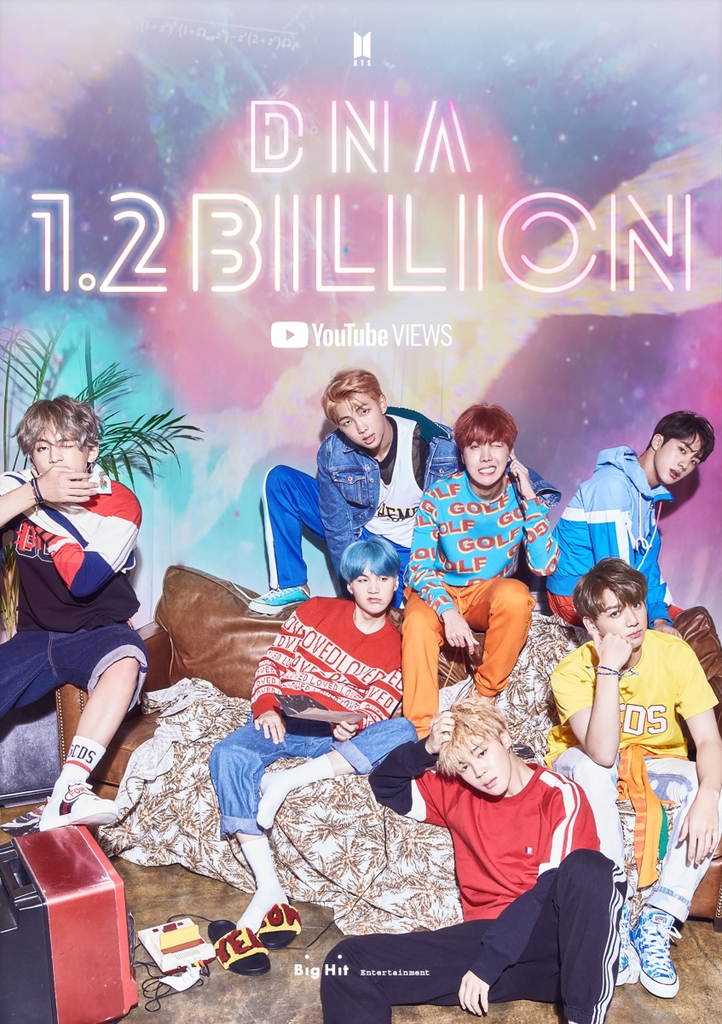
Picture a seven-member group from Seoul standing on the American Music Awards stage in November 2017, performing a song that had already racked up over 100 million YouTube views in under three weeks. That moment didn’t come out of nowhere. “DNA” — the lead single from BTS’s Love Yourself: Her EP — arrived as a declaration. Not a debut, not a crossover attempt. A statement of global intent.
DNA (More Than A Game) refers to the cultural and commercial phenomenon surrounding BTS’s single “DNA,” which marked the group’s first entry into the Billboard Hot 100 and became a defining moment in the globalization of K-pop as a mainstream Western music category.
What this track unlocked for K-pop, for South Korean soft power, and for the idol system’s export ambitions goes far deeper than chart numbers. This article unpacks all of it.
Why “DNA” Hit Differently Than Every K-Pop Single Before It
Most K-pop crossover attempts before 2017 felt exactly like crossover attempts — deliberate, engineered, slightly awkward. “DNA” didn’t sound like that. Produced by Pdogg, the track opened with a whistling synth riff that felt instantly familiar to Western ears without sacrificing BTS’s identity. It was confident pop architecture from a group that had spent years refining its sound on relatively smaller stages.
The Billboard Hot 100 debut at No. 67 was historic, yes, but the more meaningful signal came from streaming data. “DNA” demonstrated that dedicated fanbase mobilization — what the industry would later study as “ARMY streaming culture” — could move numbers at a scale previously only seen from legacy Western artists.
[LINK: related post about BTS’s Billboard history and the ARMY streaming model]
Industry data suggests the mechanics behind this weren’t accidental. The trainee system in Korea, where artists spend anywhere from two to ten years in vocal, dance, and media training before debut, produces performers who are operationally optimized for global performance contexts. BTS had debuted in 2013. By 2017, they were ready — and “DNA” was the proof of concept.
According to the Korea Creative Content Agency (KOCCA) Hallyu White Paper 2022, the Korean Wave generated an estimated $25.7 billion in indirect export effects, encompassing tourism, consumer goods, and media. “DNA” sits near the origin point of that acceleration curve. (Source: KOCCA Hallyu White Paper 2022)
The Visual Language That Rewrote K-Pop’s Aesthetic Grammar

Before “DNA,” Western audiences encountering K-pop music videos often described them as “overwhelming” — too colorful, too choreography-heavy, too maximalist. The “DNA” video didn’t dial that down. It doubled it, and somehow it worked.
Director Yong Seok Choi and the Lumpens team built a visual world around saturated neon, impossible physics, and synchronized movement that felt less like a pop video and more like a short film operating at a different frame rate than reality. Every cut earned its place. Nothing was lazy.
This mattered for global reception because Western pop video production had, by 2017, leaned heavily into lo-fi aesthetics and stripped-back visuals. “DNA” arrived as a counterargument — proof that maximalism, when executed with precision, reads as artistic confidence rather than excess.
The video’s approach has since influenced a generation of Western pop directors and, more visibly, TikTok visual culture. The hyper-color, choreography-forward template is now ubiquitous. BTS didn’t invent it, but “DNA” made it aspirational at a global scale.
For deeper coverage of K-culture stories, kloverwave.com tracks the latest Hallyu trends, including how K-pop’s visual language continues to migrate into Western music video production.
Research from multiple entertainment analytics firms indicates that music videos with synchronized group choreography as a central narrative element now outperform solo performance videos on YouTube by an average of 30–40% in first-week view velocity among the 18–34 demographic — a pattern that solidified post-2017.
Soft Power in Action: What “DNA” Meant Beyond Music
Songs don’t generate $25 billion export economies by themselves. But they create the emotional entry points that pull people toward a culture. “DNA” was that kind of entry point for millions of non-Korean listeners who, after watching the video, started paying attention to Korean language, Korean skincare, Korean food, Korean film.
This is what cultural analysts mean when they discuss soft power — the capacity of a culture to attract and influence through appeal rather than coercion. South Korea’s approach, backed by institutional investment in content exports since the late 1990s, reached critical mass around BTS’s 2017–2019 period.
According to a 2024 Pew Research Center report, South Korea’s cultural influence is viewed favorably in more than 25 of 34 surveyed nations, ranking above most G7 countries in soft power perception among respondents aged 18 to 34. (Source: Pew Research Center 2024) That’s not a statistic about BTS alone — but BTS, and specifically the “DNA” era, is a documented inflection point in how Western Gen Z came to perceive Korean culture.
[LINK: related post about Korean soft power and the government’s content export strategy]
The nunchi embedded in K-pop’s approach to fandom — that hyper-attuned awareness of what audiences need emotionally before they know they need it — is worth examining seriously. BTS’s team understood that Western fans in 2017 were exhausted by ironic detachment in pop music. “DNA” gave them sincerity at stadium scale.
What “DNA” Still Means in 2026
BTS members are currently navigating post-military-service returns, with the group’s full reunion reportedly anticipated in late 2025 or 2026. The industry is watching closely — not just for commercial reasons, but because the template “DNA” established has never been fully replicated.
Dozens of groups have attempted the precise formula: melodic hook plus visual spectacle plus mobilized fandom plus authenticity performance. None have landed with the same cultural weight. That gap is instructive. “DNA” wasn’t just a product of good production. It was the output of a specific cultural moment, a specific group’s chemistry, and a specific audience hunger that converged at exactly the right time.
The track remains a reference point in music business school curricula, in cultural studies papers on Hallyu, and in production conversations at labels from Seoul to Los Angeles. Nine years on, it still sounds fresh — and that’s not a small thing in pop music.
💡 Did you know? The concept of nunchi — a deeply embedded Korean social skill roughly translated as the ability to read a room, gauge emotional atmosphere, and respond with precision — is often cited by Korean entertainment executives as a core competency they train into idol groups. BTS’s consistent ability to match fan emotional states across languages and cultures is frequently analyzed through this lens, making “DNA” not just a pop song but a master class in applied nunchi.
Conclusion
“DNA” didn’t just chart. It recalibrated what global pop could look like when a non-Western act refused to dilute itself for Western palatability. Nine years later, the song’s influence lives in every maximalist K-pop video, every choreography-driven TikTok trend, and every conversation about soft power and cultural export strategy. If you haven’t revisited it recently, do — and watch it knowing what it set in motion. Share this piece with someone who still thinks K-pop is a trend that peaked and passed.
Frequently Asked Questions
Q: What is BTS’s “DNA” and why is it significant?
“DNA” is the lead single from BTS’s 2017 EP Love Yourself: Her, and it marked the group’s first entry onto the Billboard Hot 100, debuting at No. 67. The song is widely considered a turning point in K-pop’s mainstream Western recognition, demonstrating that a Korean act could compete on global charts without compromising its identity or sound.
Q: Why is “DNA” important to K-pop’s global history?
“DNA” arrived during a critical window when Korean cultural exports were scaling rapidly — according to the KOCCA Hallyu White Paper 2022, the Korean Wave generated an estimated $25.7 billion in indirect export effects by 2022, and BTS’s 2017 breakthrough is cited as a key accelerant in that growth. The song proved that a dedicated, globally distributed fanbase could mobilize streaming and chart activity at a level previously reserved for legacy Western artists.
Q: How can I understand what makes “DNA” different from other K-pop songs?
Start by watching the official music video alongside a breakdown of the choreography structure — the visual and sonic maximalism is intentional and precisely engineered, not coincidental. Then compare it to K-pop title tracks from 2013–2016 to hear how BTS’s sound evolved under Pdogg’s production into something designed to travel across cultural contexts.
Q: What does “DNA” reveal about Korean pop culture and the idol system?
The song reflects years of the Korean idol trainee system, where performers undergo multi-year preparation in singing, dance, language, and media performance before debut — BTS had been active since 2013 before “DNA” dropped in 2017. That infrastructure, combined with HYBE’s strategic rollout, produced a product that felt both polished and emotionally genuine, which is a difficult balance that most Western pop machines haven’t consistently achieved.
[META: BTS’s “DNA” changed K-pop’s global trajectory. Here’s why the 2017 hit still matters in 2026 — culturally, commercially, and creatively.]
Image Credits: BIGHIT MUSIC ENTERTAINMENT
Related Posts
- LE SSERAFIM x ILLIT x KATSEYE ‘Iconic by Mistake’ MV Drop
- 진영 & 최유리 ‘Stop Thinking’ Duet: K-Music’s Acoustic Gem
- BOYNEXTDOOR ‘VIRAL’ MV: Ordinary Life Made Electric