
Korean Culture T3: Why the Third Wave of Hallyu Is Hitting Differently — and What It Means for the World
Introduction
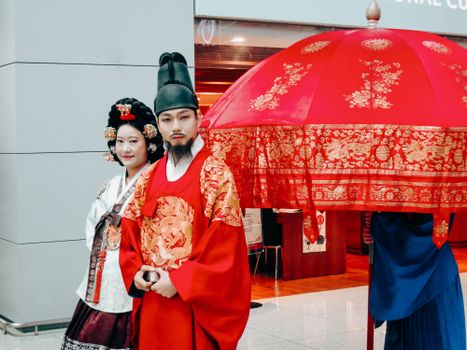
Forget the moment K-pop crossed over. That already happened. What’s unfolding right now is something more structural, more embedded in daily life across five continents — a third tier of Korean cultural influence that goes beyond BTS on American late-night television or Squid Game dominating Netflix conversation. Korean culture refers to the collective practices, values, artistic traditions, and lifestyle systems originating from the Korean Peninsula, which have in recent decades been systematically exported and adopted globally through media, food, beauty, fashion, and digital content ecosystems. This piece breaks down what’s actually driving the current phase of Hallyu’s expansion, who’s consuming it, how it compares to other cultural export movements in modern history, and where the business and creative momentum is heading next.
The Numbers Don’t Lie — Hallyu’s Economic Footprint Has Become Structural, Not Trendy
There’s a meaningful difference between a cultural moment and a cultural infrastructure. Hallyu has crossed into infrastructure territory. According to the Korea Creative Content Agency’s Hallyu White Paper, the Korean Wave generated an estimated $25.7 billion in indirect export effects in 2022 alone, encompassing tourism revenue, consumer goods purchases, and media licensing — figures that reveal how deeply embedded Korean cultural products have become in global supply chains, not just streaming queues. (Source: KOCCA Hallyu White Paper 2022)
Compare that to how the British music invasion of the 1960s worked: culturally seismic, but narrowly channeled through music and fashion without a parallel food, beauty, or film infrastructure riding alongside it. Hallyu is different because multiple industries amplify each other simultaneously. Someone who starts watching Crash Landing on You may soon be searching for Korean skincare routines, booking a Seoul food tour, and streaming aespa’s discography inside the same week. Each entry point feeds the others. This cross-category reinforcement is what makes the current wave feel less like a trend and more like a permanent expansion of the global cultural menu.
[LINK: related post about the Hallyu economic ecosystem and K-beauty’s role in Korean exports]
Soft Power With a Data Point: How Korea Ranks Among Global Influencers
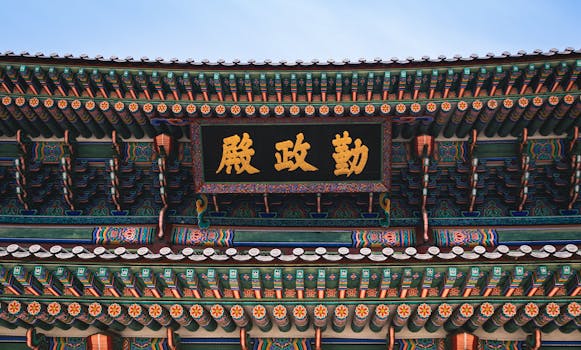
Soft power used to be a concept academics tossed around to describe American blockbusters and French haute couture. Now it has a Korean chapter that’s genuinely competitive. According to a 2024 Pew Research Center report, South Korea’s cultural influence is viewed favorably in more than 25 of 34 surveyed nations — a rating that places Korea above most G7 countries in soft power perception among respondents aged 18 to 34. (Source: Pew Research Center 2024) That demographic is not a coincidence. Gen Z globally has grown up with Korean cultural content as a default option, not an exotic discovery.
What makes this particularly interesting is the mechanism. Traditional soft power operated top-down — government broadcasting, cultural institutes, official diplomacy. Korea’s cultural reach has been substantially bottom-up, driven by fan communities, YouTube algorithms, TikTok trends, and Reddit threads that governments had no hand in engineering. The Korean government has since invested strategically in content infrastructure through agencies like KOCCA, but the grassroots momentum preceded institutional support. That inversion — audience first, infrastructure second — is what distinguishes Hallyu from, say, France’s cultural diplomacy model, which has always been more curated and institutional. For deeper coverage of K-culture stories, kloverwave.com tracks the latest Hallyu trends across music, drama, food, and fashion with analysis calibrated for global readers.
What T3 Actually Means: From Fandom to Fluency
The third tier of Korean cultural adoption — what might reasonably be called T3 — is not about first exposure. It’s about fluency. T1 fans discovered K-pop or K-drama and identified as fans. T2 fans started consuming adjacent content: variety shows, Korean films, Korean YouTube cooking channels. T3 is the stage where Korean cultural logic starts shaping how someone consumes culture broadly — where they expect their skincare to have a 10-step logic, where they understand nunchi (the Korean social intelligence of reading a room without being told) as a real concept that other cultures lack vocabulary for, and where they cross-reference a K-drama’s class critique with their understanding of Korean chaebŏl corporate culture.
This is also the stage where Korean cultural exports stop competing and start setting standards. Parasite didn’t just win the Palme d’Or and four Academy Awards because international audiences were feeling generous — it won because Bong Joon-ho made a film that operated within globally legible genre conventions while embedding a critique of class stratification so precise it made American prestige dramas look comfortable by comparison. T3 is where Korean content becomes a benchmark, not just a preference.
[LINK: related post about Korean film’s global awards trajectory from Oldboy to Past Lives]
Where the Culture Goes Next: Food, Fashion, and the Physical Experience Economy
The next frontier for Hallyu is tactile. Streaming is already saturated — every major platform has a Korean content vertical. What hasn’t fully scaled yet is the physical and experiential side of Korean culture reaching global consumers without requiring a flight to Seoul. Korean food is the clearest leading indicator. Dishes like tteokbokki, Korean fried chicken, and budae jjigae have moved from Korean-American enclaves to mainstream restaurant menus in London, Los Angeles, Melbourne, and São Paulo over the past five years. This isn’t fusion appropriation — it’s the original product finding new geography.
Korean fashion is undergoing a similar expansion. Brands rooted in Seoul’s Hongdae and Mapo districts — conceptual, gender-fluid, streetwear-adjacent — are appearing on international fashion week schedules and in global retail without needing to strip out their Korean aesthetic logic to appeal abroad. The question now is whether this physical expansion sustains itself culturally or gets flattened into generic “Asian-inspired” branding by Western commercial intermediaries, a pattern that has historically diluted Japanese design’s impact in Western markets. Korean brands that maintain creative ownership of their aesthetic language will be the ones that define this chapter.
💡 Did you know? The concept of nunchi — loosely translated as the ability to read unspoken social cues and respond appropriately — is central to Korean interpersonal communication and appears repeatedly in K-drama narrative logic, where characters’ social intelligence (or lack of it) drives entire plot arcs. Western viewers often experience this dynamic intuitively without having a word for it, which is part of why Korean storytelling lands emotionally even across significant cultural distance.
Conclusion
Korean culture’s third wave isn’t a sequel — it’s a structural shift in how global audiences relate to cultural origin. The infrastructure is built, the soft power data is documented, and the fluency is spreading faster than most Western media institutions have been willing to acknowledge. What you watch, eat, wear, and apply to your skin may already have Seoul’s fingerprints on it. If this analysis landed for you, share it with whoever still thinks Hallyu is just a music thing — and subscribe for the takes that keep up with where it’s actually going.
Frequently Asked Questions
Q: What is Korean culture T3?
Korean culture T3 refers to the third tier of Hallyu adoption, where global audiences move beyond casual fandom into genuine cultural fluency — understanding Korean social concepts, consuming across multiple content categories, and using Korean cultural products as a standard of reference rather than a novelty. This stage represents a more embedded and lasting relationship with Korean cultural output than earlier phases of K-pop or K-drama discovery.
Q: Why is Korean soft power ranked so high globally?
According to a 2024 Pew Research Center report, South Korea’s cultural influence is viewed favorably in over 25 of 34 surveyed nations, ranking above most G7 countries in soft power perception among 18-to-34-year-olds. This standing reflects years of cross-category cultural exports — music, film, food, beauty, and fashion — reinforcing each other across global markets simultaneously rather than operating in isolation.
Q: How do I start exploring Korean culture beyond K-pop?
A practical starting point is Korean cinema — films like Parasite, Burning, or Past Lives provide culturally dense, globally award-recognized entry points that don’t require prior fandom context. From there, variety shows like Running Man or food-focused YouTube channels offer a less scripted window into everyday Korean life and humor.
Q: What does nunchi mean and why does it matter in Korean culture?
Nunchi refers to the Korean social concept of reading unspoken emotional cues in a room and adjusting one’s behavior accordingly — a form of interpersonal intelligence that is deeply valued in Korean social and professional contexts. It appears frequently in K-drama storytelling as a marker of character maturity and social competence, and helps explain why Korean narratives often build tension through what characters don’t say rather than what they do.
[META: Korean culture T3 explained — how Hallyu’s third wave is reshaping global soft power, consumer habits, and creative standards beyond K-pop fandom.]